Aerospace Sealant Classes Explained: Differences, Uses and Applications
Last time we looked at what sealant is for in general terms. Now the practical part: sealants are sorted into Classes A, B and C, and that letter tells you how thick the material is and how it gets applied — nothing to do with what it’s chemically made of. That’s a separate question, and we’ll get to it in the next guide.
Why does the letter matter? Because a sealant with perfect chemistry for the job is useless if nobody can actually apply it to the joint in front of them with the tools on hand.
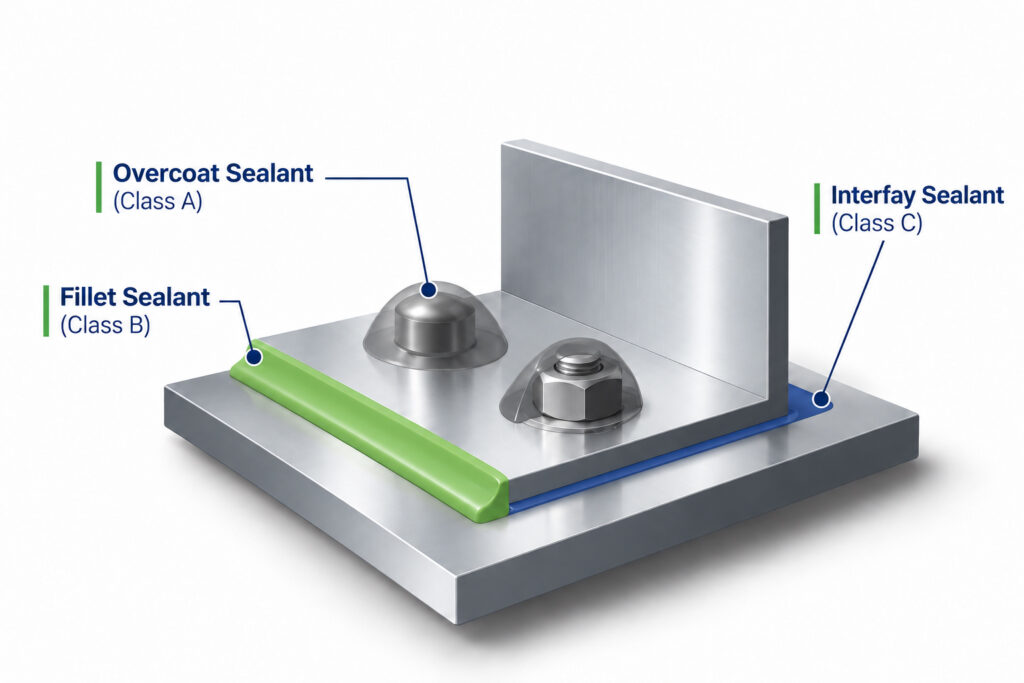
Class A — brushable
Thin enough to go on with a brush. Class A shows up on fastener heads, small gaps, touch-up jobs — anywhere a thick bead would be overkill or impossible to control by hand. It also tends to cure faster than the thicker classes, which suits high-volume, low-complexity work on the line.
Class B — injection and fillet sealing
Thicker, and usually dispensed through an extrusion gun and nozzle rather than a brush. Class B is the one you’ll see most often for corrosion-inhibitive sealing around fasteners and fittings, where the bead needs to hold its shape rather than just coat the surface.
Class C — fay surface sealing
Sits between A and B in thickness. Its job is fay sealing — sealing between two mating surfaces before they’re joined, so the sealant compresses and spreads as the parts come together.
Don't confuse this with chemistry
New engineers mix these up constantly: Class A/B/C describes viscosity and how it’s applied. Polysulfide, polyurethane, silicone or fluorosilicone describes what it’s resistant to — fuel, heat, UV. A spec calls out both. A two-part polysulfide sealant, for instance, might come in Class A, B or C depending on where on the aircraft it’s going.
Get the chemistry right and the class wrong (or vice versa) and you’ve still got a problem — the sealant might resist everything it needs to resist and still be impossible to apply properly to that joint.
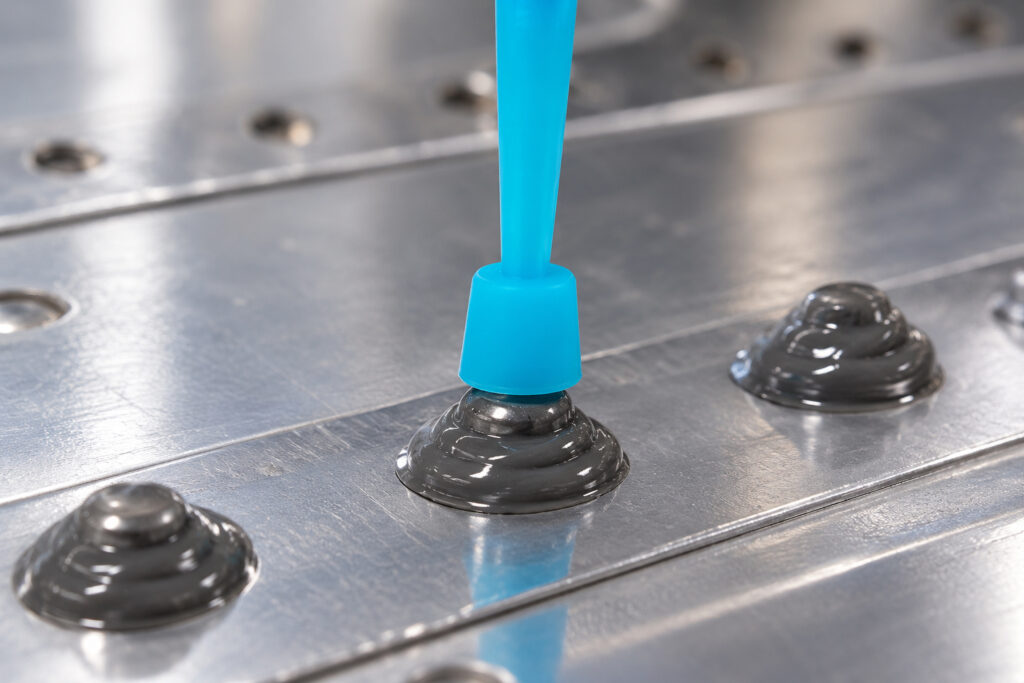
Picking the right class
Three questions tend to answer it:
- How’s it being applied — brush, gun, or compression between mating parts?
- What’s the joint geometry — small fastener or long structural seam?
- What’s the production volume? Class A’s faster cure suits high-throughput fastener work; B and C are more often part of slower, more deliberate structural sealing.
One more thing worth flagging: even with the right class chosen, the wrong nozzle or gun for that viscosity is a frequent cause of inconsistent seals on the line. More on that in our guide to the application toolkit.