What Is Aerospace Sealant? A Beginner's Guide
Ask most people outside the industry what “aerospace sealant” means and you’ll get a shrug. Even inside aircraft manufacturing, it’s a word people use every day without ever getting a proper explanation. So here’s the short version, and the longer one underneath it.
What sealant actually does
Sealant closes gaps. That’s the whole job, at its simplest: it’s applied to joints, seams, fasteners and panel edges to keep fuel, water and air where they’re supposed to be, and out of places they’re not. That’s different from a structural adhesive, which holds parts together. Sealant usually isn’t load-bearing — it’s there so the structure underneath stays dry, uncontaminated, and free of corrosion.
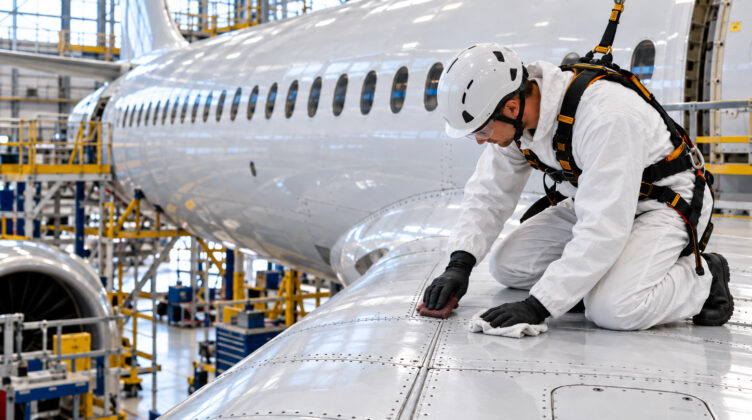
Where does this actually happen on an aircraft? Almost everywhere. Rivets and fasteners, fuel tank seams, access doors, the windshield and canopy, the firewall between engine and cabin. A single narrow-body aircraft can carry sealant in the range of several hundred kilograms, spread across thousands of individual application points. That’s not a finishing touch — it’s a core part of assembly.
Why it's not the same as caulk from a hardware store
General-purpose sealant for a bathroom or a window frame is built for a much easier life. Aerospace sealant has to survive:
- Temperature swings from freezing altitude to hot engine bays
- Constant vibration over decades of flight cycles
- Direct contact with jet fuel and hydraulic fluid
- Weight budgets where every gram is scrutinized
- Approval from the FAA, EASA, and often the airframer’s own spec on top of that
Put those together and you get a product category that behaves nothing like construction sealant, even though the word “sealant” makes them sound related.
Two questions that decide which sealant you need
New to specifying or applying sealant? These are the two that matter:
- How is it applied? Some sealants are thin enough to brush on; others need a gun and a nozzle. We cover this properly in the next guide, on Sealant Classes A, B and C.
- What’s it made of? Polysulfide, polyurethane, silicone, fluorosilicone — each resists fuel, heat and UV differently. That’s the subject of our sealant chemistry guide.
Get either one wrong and you’re not just redoing the work. You may end up with a part that doesn’t meet airworthiness requirements.
Application matters just as much as the sealant
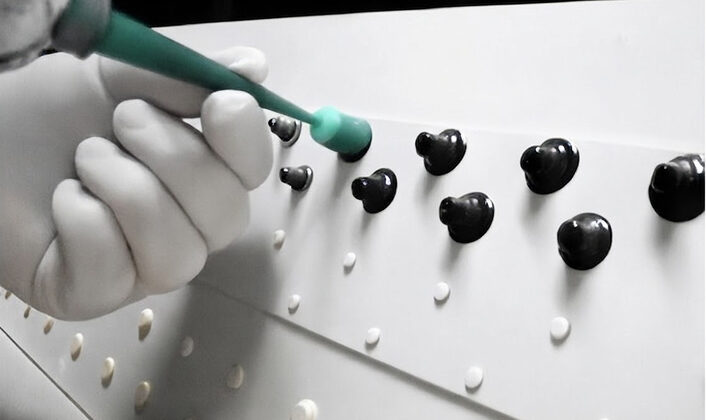
A perfectly chosen sealant, badly applied, is still a defect. Surface prep, using the right nozzle for the joint, mixing two-part sealants in the correct ratio, working inside the pot life before it starts to cure — all of that decides whether the seal actually holds. It’s why application tooling gets its own body of expertise in this field, rather than being an afterthought once the sealant’s been picked.
What's coming next
This is the first of a short series on aerospace sealant basics — classification, chemistry, manual vs. automated application, and the tools involved. If any of this is new territory, each guide picks up where the last one left off.